What Is CPN and Why Does It Decide Your Admission?
CPN stands for Composite Percentage Number — a single merit score that University of Sindh and MUET use to rank engineering, IT, and other undergraduate applicants. Instead of looking at your Matric, Intermediate, and Entry Test scores separately, admission offices reduce them to one weighted number, and every seat is offered strictly in order of that number until seats run out. A one-point difference in CPN can be the line between an offer letter and a wait-list.
The CPN Formula (University of Sindh / MUET)
CPN = (Matric % × 0.10) + (Intermediate % × 0.30) + (Entry Test % × 0.60)
- Matric — 10% weight: your SSC result contributes the smallest share.
- Intermediate — 30% weight: your HSC/FSc result carries three times the weight of Matric.
- Entry Test — 60% weight: the pre-admission test alone decides more than half of your final CPN.
Worked Example
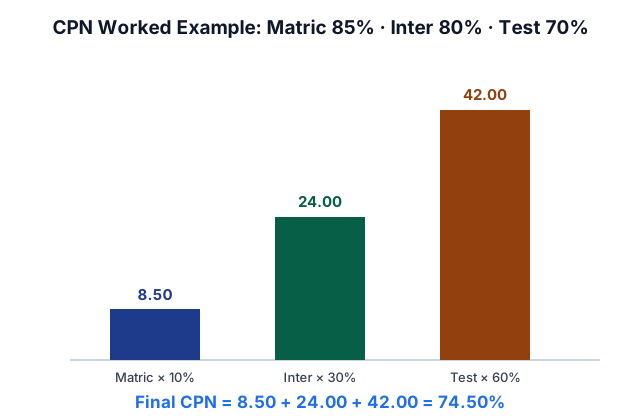
Matric = 85%, Intermediate = 80%, Entry Test = 70%:
CPN = (85 × 0.10) + (80 × 0.30) + (70 × 0.60) = 8.50 + 24.00 + 42.00 = 74.50%
NED's Formula Is Different — Don't Assume It's the Same CPN
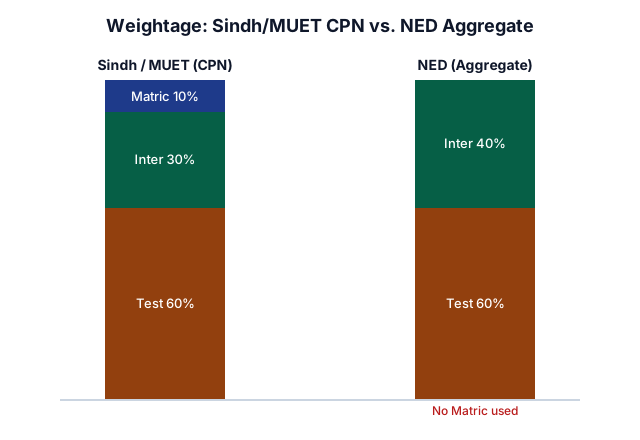
NED University does not use the 10/30/60 CPN formula. Its current aggregate weighs Intermediate at 40% and the NED Entry Test at 60%, and it excludes Matric marks completely. That single difference — no Matric at all — is why a student's NED aggregate and Sindh/MUET CPN can look noticeably different even with identical academic scores. Use the formula switch above the calculator to compare both.
| University | Matric | Intermediate | Entry Test |
|---|---|---|---|
| University of Sindh | 10% | 30% | 60% |
| MUET | 10% | 30% | 60% |
| NED University | — | 40% | 60% |
Weightages can be revised by a university at any time — always cross-check the current figure on the official admission prospectus before relying on it for a decision.
Which Score Should You Focus On? (Sensitivity)
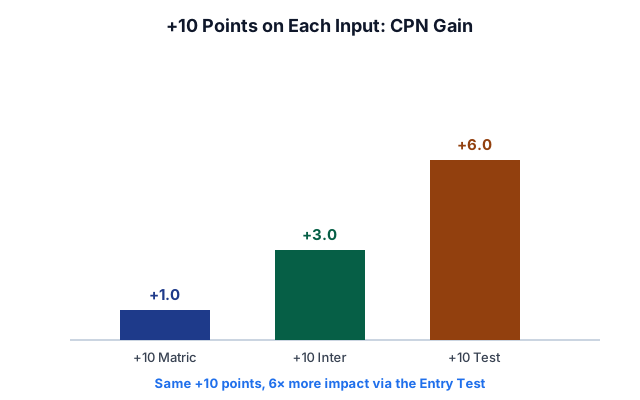
Because the Entry Test carries the largest weight, it moves your CPN the most for the same effort. Starting from the worked example above, adding 10 percentage points to just one input changes the final CPN by very different amounts:
How Much Entry Test Score Do You Actually Need?
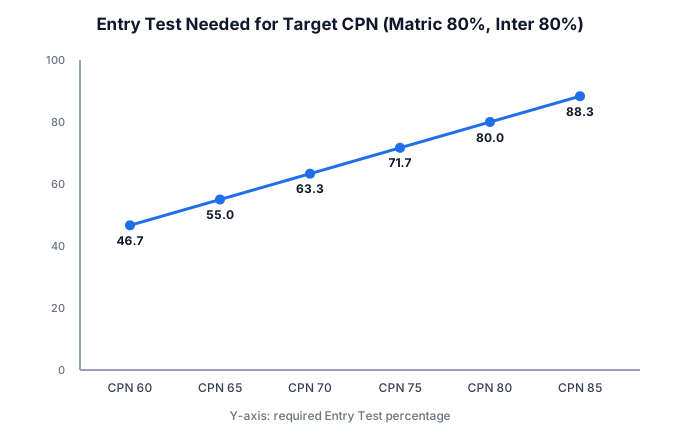
If your Matric and Intermediate are already fixed, you can work backward to see exactly what Entry Test score would hit a given CPN target. The chart below holds Matric and Intermediate at 80% each and solves for the Entry Test score needed at several CPN targets:
How to Use This Calculator
- Pick the formula that matches your target university (Sindh/MUET, NED, or a custom weightage).
- Enter your Matric percentage (skipped automatically for NED).
- Enter your Intermediate percentage.
- Enter your Entry Test percentage.
- Click Calculate to see your full breakdown and final score.
Universities That Use CPN — and Ones That Don't
University of Sindh and MUET publish the same 10/30/60 CPN formula for their own undergraduate admissions. NED, by contrast, runs its own separate aggregate (40% Inter + 60% Test, no Matric), and other Pakistani universities such as NUST and FAST use their own distinct weightage systems entirely — so "CPN" specifically refers to the Sindh/MUET formula, not a single nationwide standard.
Outside Pakistan, many countries run comparable weighted-composite admission scores under different names, but the exact term "CPN" and this specific 10/30/60 split are tied to Sindh's admission system — so if you're applying outside Pakistan, check your target institution's own published formula rather than assuming this one applies.
Tips to Improve Your Score
- Since the Entry Test carries the most weight everywhere on this page, prioritize test prep over squeezing out a few extra Matric marks.
- Practice past papers under timed conditions — CPN-deciding entry tests are usually MCQ-based with negative marking in some years, so confirm the current test format with your university.
- Recalculate your CPN as soon as each result (Matric, then Inter, then test) is announced, so you know your realistic standing before the merit list closes.
- Compare your number against last year's closing CPN for your target department — it's not official, but it's the best available benchmark.
Frequently Asked Questions
What is CPN in Pakistani university admissions?
CPN stands for Composite Percentage Number. It is a single merit score used mainly by University of Sindh and MUET, built by combining a student's Matric, Intermediate, and Entry Test percentages using fixed weightages.
What is the CPN formula used by University of Sindh and MUET?
CPN = (Matric percentage x 10%) + (Intermediate percentage x 30%) + (Entry Test percentage x 60%). This is the formula University of Sindh and MUET publish for undergraduate admissions.
Does NED University use the same CPN formula?
No. NED University uses a different aggregate: 40% Intermediate plus 60% Entry Test, and it does not use Matric marks at all. This calculator lets you switch to the NED formula separately.
Which universities use the CPN system?
The 10/30/60 CPN formula is published by University of Sindh and MUET for their own admissions. Other Pakistani universities, including NED, NUST and FAST, use their own separate weightage formulas, so always confirm the exact figure with your target university.
What CPN score is needed for admission?
There is no fixed passing CPN — each department publishes its own closing merit every year based on how many students apply and how they score, so a CPN that was enough last year is not a guarantee for this year.
Is the CPN formula the same every year?
Weightages have stayed stable for University of Sindh and MUET in recent admission cycles, but universities can revise their formulas, as NED did when it changed its own weightage. Always check the current prospectus before relying on any calculator.