Epoxy Resin Calculator
Calculate Your Epoxy Needs
Note: Results are estimates. Always add 5–10% extra epoxy for waste and surface absorption (this calculator's "Recommended Buy" figure already includes a 10% buffer).
What is an Epoxy Calculator?
An Epoxy Calculator is a precision digital tool designed to help DIYers, woodworkers, and contractors determine the exact volume of resin required for a specific project. Whether you are pouring a thick river table, coating a garage floor, or creating resin art, knowing the volume is the difference between a masterpiece and a sticky, unfinished mess.
Why Epoxy Calculation is Crucial
Epoxy resin is an expensive material. Underestimating the amount needed can lead to "dry spots" or visible seams if you have to mix a second batch mid-pour. Overestimating leads to expensive waste that cannot be reused once mixed. Furthermore, different projects require different pour depths, which drastically changes the volume requirements.
How to Calculate Epoxy Resin
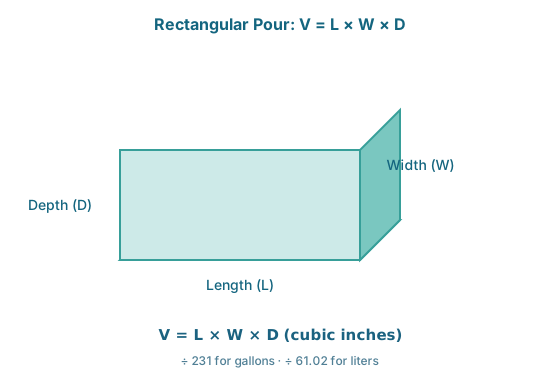
For a rectangular pour, you need three dimensions: Length, Width, and Depth (Thickness).
The Rectangular Formula
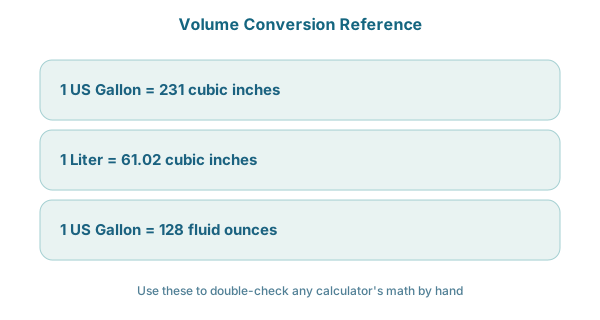
If you are working in inches, the result is in cubic inches. Divide by 231 for gallons, or by 61.02 for liters.
The Circular Formula
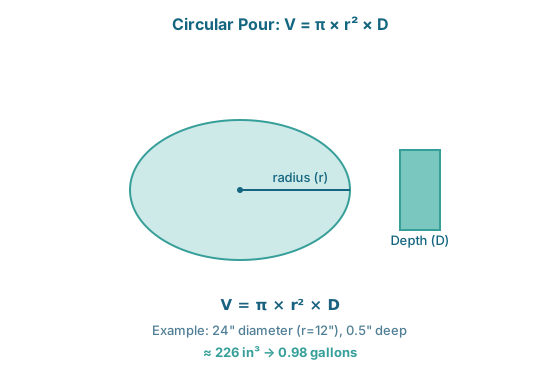
For round tables, coasters, or circular molds, use the radius instead: V = π × r² × D. This calculator's "Circular" mode runs this formula automatically.
Epoxy for Tables, Floors, and Coatings
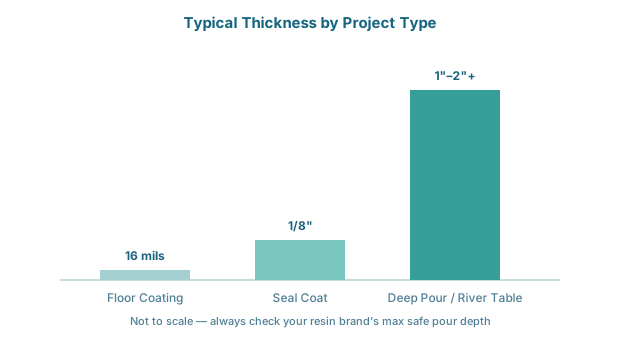
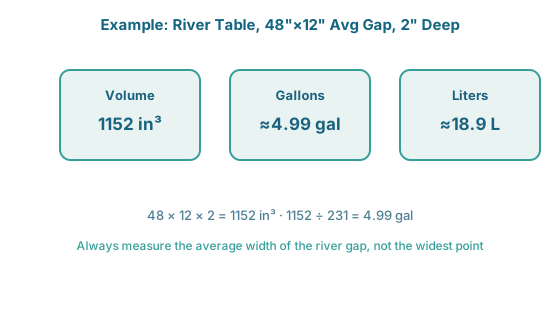
- River Tables: These are tricky because the "river" isn't a perfect rectangle. Measure the average width of the gap and use that as your width input.
- Flooring: Most floor epoxies are applied in "mils" (1/1000 of an inch). A typical 100% solids epoxy floor covers about 100 square feet per gallon at 16 mils.
- Seal Coats: These are thin layers (usually 1/8") used to prevent air bubbles in wood before the main pour.
Step-by-Step Guide to Use the Tool
- Select Your Shape: Choose Rectangular or Circular.
- Pick Your Unit: Inches, feet, centimeters, or meters.
- Input Dimensions: Enter length and width (or radius for circular pours).
- Define Thickness: Enter how deep you want the epoxy (e.g., 2 inches for a river table, 1/8 inch for a countertop).
- Calculate: Hit the button to see your results in gallons, liters, and fluid ounces, plus a 10% buffer already added to the "Recommended Buy" figure.
Tips to Avoid Resin Waste
- Seal Porous Surfaces: Wood absorbs resin. A thin seal coat prevents the "disappearing resin" act during your main pour.
- Level Your Surface: If your table is tilted, resin pools on one side, requiring more volume to cover the "high" side.
- Mix in Batches: For massive pours, calculate the total but mix in manageable increments if your resin has a short pot life.
Real-World Examples
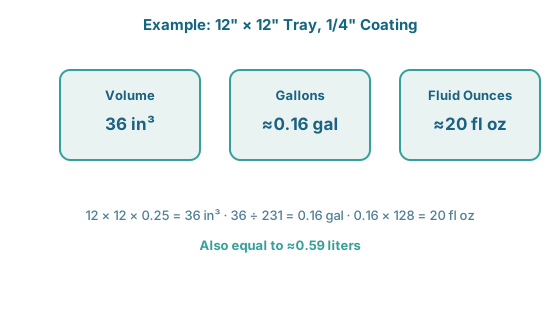
Example 1 (Small Tray): A 12" x 12" tray with a 1/4" coating requires approximately 0.16 gallons (about 20 fl oz, or 0.59 liters).
Example 2 (River Table): A 48" x 12" (average width) river that is 2" deep requires roughly 4.99 gallons (about 18.9 liters).
Benefits of Using Our Online Calculator
Using an online tool eliminates the risk of "math fatigue." Our tool provides instant conversions between Imperial and Metric units, includes a built-in waste margin, and is optimized for mobile use so you can calculate right in your workshop.