Drywall Calculator
Note: This is an estimate. Always purchase extra sheets for cuts and mistakes.
Drywall Calculator: The Ultimate Guide to Estimating Sheets for Your Project
Planning a home renovation or finishing a basement can be an exciting journey, but it often starts with a daunting question: "How many drywall sheets do I need?" Getting this number wrong can lead to multiple trips to the hardware store or, conversely, a pile of expensive, wasted material sitting in your garage.
This is where a Drywall Calculator becomes an essential tool for your project. Whether you are a first-time DIYer or an experienced contractor, an accurate drywall estimator saves you time, money, and stress. In this guide, we will break down everything you need to know about drywall calculation, from standard sheet sizes to the professional formulas used to determine material needs.
What Is Drywall?
Drywall, also known as plasterboard, wallboard, or gypsum board, is the standard material used to create walls and ceilings in modern construction. It consists of a core of gypsum plaster pressed between two thick sheets of paper.
Drywall is favored because it is fire-resistant, relatively easy to install, and provides a smooth surface ready for paint or wallpaper. In North America, the most common thickness for interior walls is 1/2 inch, while 5/8 inch is often used for ceilings or walls requiring a higher fire rating.
Why Use a Drywall Calculator?
Using a drywall sheet calculator is about more than just numbers; it's about efficiency. Here is why you should always run your measurements through a calculator before buying:
How the Drywall Calculator Works
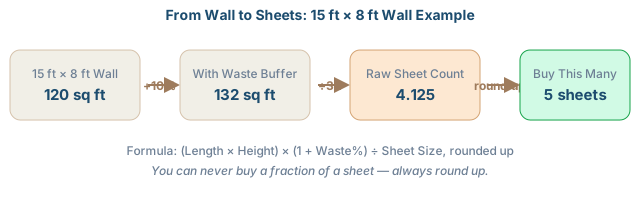
The logic behind a drywall calculator is based on geometry. To find out how much material covers a space, the tool follows a specific drywall calculation formula.
The Basic Formula
Calculate Wall Area: First, you find the total surface area.
Determine Sheets Needed: Divide the total area by the square footage of a single drywall sheet.
Add Waste Percentage: No room is perfectly square, and cuts are inevitable. Professionals always add a buffer (usually 10% to 15%) to account for off-cuts and mistakes.
Common Drywall Sheet Sizes
To get an accurate estimate, you must know which sheet size you plan to buy. Drywall typically comes in a standard width of 4 feet, but lengths vary — and all three sizes below are available in the calculator above:
| Sheet Size | Total Square Footage | Common Use |
|---|---|---|
| 4 × 8 ft | 32 sq. ft. | Most common; easiest for one person to carry. |
| 4 × 10 ft | 40 sq. ft. | Ideal for high ceilings (10ft walls). |
| 4 × 12 ft | 48 sq. ft. | Best for long walls to reduce the number of joints/seams. |
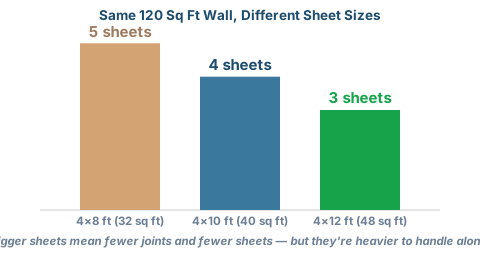
Choosing a bigger sheet means fewer sheets overall — here's the same 120 sq ft wall calculated with each size:
Step-by-Step Guide to Calculate Drywall
Using our online drywall calculator is straightforward. Follow these steps for the most accurate results:
- Measure Your Walls: Use a tape measure to find the length and height of every wall you plan to cover.
- Enter Wall Dimensions: Input the length and height into the calculator fields.
- Select Sheet Size: Choose whether you are buying 8ft, 10ft, or 12ft sheets.
- Add Waste Percentage: For a simple rectangular room, 10% is usually enough. For rooms with many corners or alcoves, choose 15%.
- Click Calculate: The tool will provide the total square footage and the exact number of sheets to purchase.
- Add to Project Total: Doing a whole room? Click "Add to Project Total" after each wall or the ceiling to build a running total across your entire project.
How Much Waste Should You Really Add?
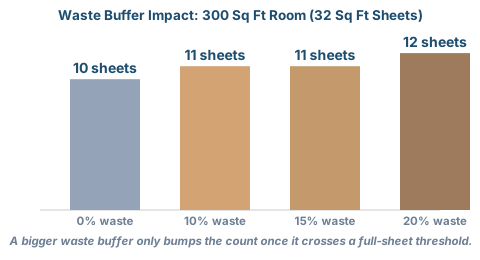
The waste percentage you choose doesn't always change your final sheet count — it only matters once it pushes you past a full-sheet threshold. Here's what happens to a 300 sq ft room at different waste levels:
Example: Calculating a Full Room, Walls and Ceiling
Most projects aren't just one wall — here's a complete 12 ft × 10 ft room with 8-foot ceilings, walls and ceiling included:
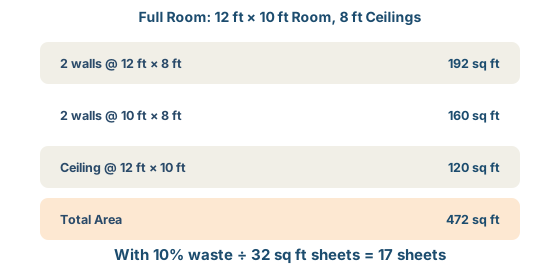
This is exactly the kind of multi-surface project where the Add to Project Total button on the calculator above earns its keep — calculate each wall and the ceiling separately, then let the running total add them up for you.
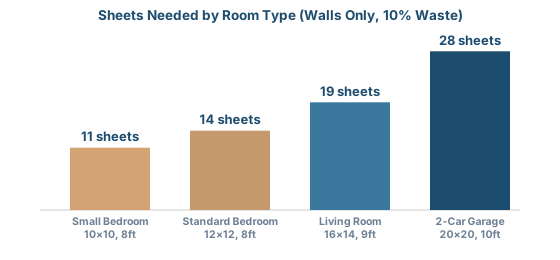
Sheets Needed by Common Room Size
If you're still in the planning phase and don't have exact measurements yet, here's a rough reference for typical rooms (walls only, 32 sq ft sheets, 10% waste):
Example Drywall Calculation
Let's say you are finishing a small room with one wall that is 15 feet long and 8 feet high. You plan to use standard 4x8 ft sheets.
- Total Area: 15 × 8 = 120 square feet.
- Sheet Size: A 4x8 sheet is 32 square feet.
- Raw Calculation: 120 ÷ 32 = 3.75 sheets.
- Including Waste (10%): 3.75 × 1.10 = 4.125 sheets.
✅ In this scenario, you would buy 5 sheets to ensure you have enough material to finish the wall.
Tips for Accurate Drywall Estimation
To ensure your drywall material estimate is as precise as possible, keep these pro-tips in mind:
- Measure Separately: Don't just guess the total perimeter. Measure each wall individually and add them up.
- Include the Ceiling: If you are doing the whole room, don't forget the ceiling! Measure the floor length and width to get the ceiling area.
- Account for Openings: If a wall has a very large window or a double door, you can subtract that square footage. However, for small windows, it's often safer to ignore them and treat the wall as solid to ensure you have extra scrap material.
- Check the Ceiling Height: If your ceilings are 9 feet tall, buying 8-foot sheets will result in a lot of extra horizontal seams. Consider 10-foot or 12-foot sheets instead.
Who Should Use a Drywall Calculator?
This tool is designed for anyone involved in the building process:
- DIY Homeowners: People tackling a basement, garage, or bedroom remodel who want to avoid the "oops, I'm short one sheet" moment.
- Construction Contractors: Professionals who need a quick, mobile-friendly way to verify their manual estimates on-site.
- Interior Designers: To help estimate project costs for clients during the planning phase.
- Renovation Planners: Anyone looking to create a detailed shopping list for a supply run.
Common Mistakes When Estimating Drywall
Even with a drywall estimator, humans can make errors. Watch out for these common pitfalls:
- Forgetting the Waste Factor: Never buy exactly the amount the square footage suggests. You will always lose material to corners, outlets, and mistakes.
- Mixing Sheet Sizes: If you calculate for 12ft sheets but the store only has 8ft sheets, your count will be completely wrong. Always verify stock before finalizing your estimate.
- Incorrect Measurements: "Eyeballing" a wall usually leads to underestimating. Always use a physical or laser tape measure.
- Ignoring the Ceiling: It sounds obvious, but many beginners forget that the ceiling requires drywall too!