What Is an Interest Calculator?
An Interest Calculator is a free online tool that calculates both simple interest and compound interest in a few clicks. Whether you're saving, investing, or taking out a loan, understanding how much interest you'll earn or pay is essential for financial planning — and the difference between the two calculation methods is bigger than most people expect.
Simple vs. Compound Interest: Why the Difference Is Huge
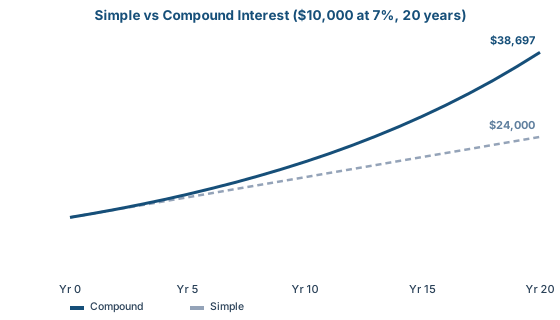
Simple interest is calculated only on your original principal, every period, for the life of the deposit or loan. Compound interest is calculated on your principal plus any interest already added, so your growth accelerates over time instead of moving in a straight line.
Types of Interest Calculations
- Simple Interest – calculated only on the original principal amount for the whole term.
- Compound Interest – calculated on the principal plus previously earned interest, compounding yearly, semi-annually, quarterly, monthly, or daily.
- Loan Interest – the same core math applies to what you'll pay on personal, auto, or home loans, though installment loans also blend principal repayment into each payment (see our EMI Calculator for that breakdown).
- Savings & Investment Interest – predicts how a deposit or investment grows, especially powerful when paired with regular contributions.
How Compounding Frequency Changes Your Result
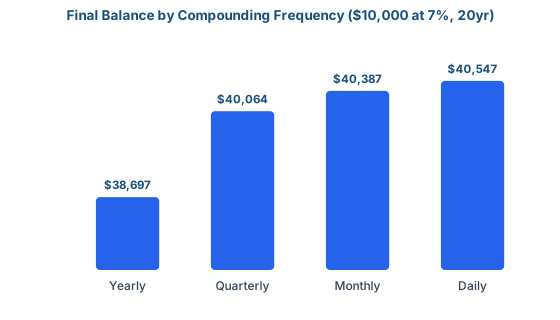
More frequent compounding means interest starts earning interest sooner — but the effect is smaller than most people assume. On the same $10,000 at 7% over 20 years:
The Real Power: Regular Contributions
This is the single biggest lever most people overlook. Adding a modest, regular contribution doesn't just add up — it compounds too, since each contribution starts earning its own interest from the moment it's deposited:
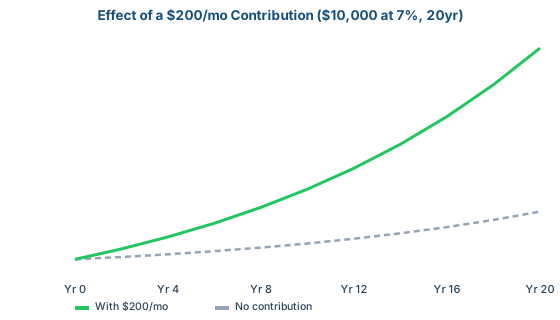
Use the "Monthly Contribution" field in the calculator above to see this effect with your own numbers.
Where Does Your Final Balance Actually Come From?
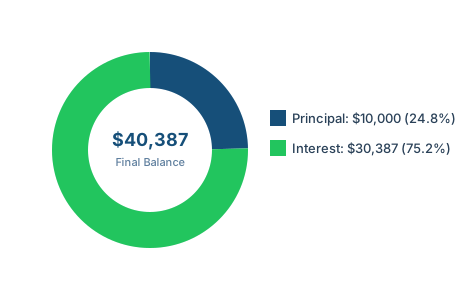
Over a long enough time horizon, most of your final balance is interest, not your original deposit:
Why Use Our Interest Calculator?
- Quick & Accurate Results – instant calculations for both simple and compound interest.
- Plan Investments – see how your savings or investments grow over time, with or without regular contributions.
- Compare Loan Options – see the real cost of borrowing across different rates and time periods.
- Smart Financial Decisions – understand how interest actually impacts your wealth before making a commitment.
How to Use Our Interest Calculator
- Enter the Principal Amount (loan, deposit, or investment).
- Type in the Annual Interest Rate (APR or bank rate).
- Set the Time Period in years.
- Choose Simple or Compound Interest.
- If compound, select a Compounding Frequency and, optionally, a Monthly Contribution.
- Click Calculate to see your total interest, final balance, and growth chart instantly.
Formula for Interest Calculation
Simple Interest:
Compound Interest:
Where P = Principal, R = annual interest rate (as a decimal), T or t = time in years, n = compounding periods per year. When a recurring contribution is included, each contribution is added to the balance and compounds forward from its own deposit date — the same way real savings and brokerage accounts work.
A Note on APY vs. the Rate You Enter
Banks often advertise APY (Annual Percentage Yield), which already bakes in compounding — it's the true annual return you'd earn. The rate this calculator asks for is the nominal annual rate before compounding is applied; the calculator does the compounding for you based on the frequency you select, so entering your bank's stated nominal rate (not their APY) gives the correct result.
Benefits of an Online Interest Calculator
- Saves time compared to manual calculations, especially with compounding and contributions involved.
- Avoids arithmetic errors that are easy to make by hand with exponents.
- Works for loans, deposits, savings, and investment growth alike.
- Free, fast, and available on any device.
Frequently Asked Questions (FAQs)
What is the difference between simple and compound interest?
Simple interest is calculated only on the original principal for the entire period. Compound interest is calculated on the principal plus any interest already earned, so the amount it's calculated on grows over time. Over long periods, compound interest produces significantly more growth from the same rate.
How do I use this Interest Calculator?
Enter your principal amount, annual interest rate, and time period in years. Choose simple or compound interest; if compound, pick a compounding frequency and optionally add a recurring monthly contribution. Click Calculate to see your total interest, final balance, and a growth chart.
Does compounding frequency really make a big difference?
It makes a real but modest difference. On $10,000 at 7% over 20 years, yearly compounding grows to $38,697 while daily compounding reaches $40,547 — about a $1,850 difference. The interest rate and time period matter far more than compounding frequency alone.
Can this calculator include regular monthly contributions?
Yes. In compound interest mode, you can optionally add a monthly contribution amount. The calculator adds each contribution to the balance and compounds it going forward, which is how most real savings and investment accounts actually grow.
Can I use this calculator for a loan instead of savings?
Yes, the same math applies whether interest is being earned or owed. For a loan's exact monthly payment schedule, though, a dedicated amortizing loan calculator (like an EMI or mortgage calculator) is more directly useful, since loan payments blend principal repayment into each payment rather than accruing interest the way a simple deposit does.
What does APY mean, and is it the same as the interest rate I enter here?
APY (Annual Percentage Yield) already factors in compounding, so it reflects your true annual return. The rate you enter in this calculator is the nominal annual rate before compounding is applied — the calculator applies compounding for you based on the frequency you choose, so entering a nominal rate here is correct.
Is this calculator accurate for real bank accounts or loans?
It gives a mathematically accurate estimate based on the rate, time, and compounding frequency you enter. Real accounts and loans can include fees, tax withholding, rate changes over time, or day-count conventions that this simplified calculator does not model, so treat the result as a close estimate rather than an exact bank statement.
Is this Interest Calculator free to use?
Yes, completely free with no registration required, and you can run unlimited calculations.
At the End
An Interest Calculator is an essential tool for anyone dealing with loans, savings, or investments. By understanding your exact simple or compound interest — and seeing what regular contributions and compounding frequency actually do to your money — you can make informed financial choices instead of relying on rough guesses.
This calculator provides mathematical estimates for planning purposes only and is not financial advice. Real accounts and loans may include fees, taxes, or terms not reflected here — confirm exact figures with your bank or lender.