AP Biology Score Conversion (Raw Score to AP Score)
Use our AP Biology Score Calculator to estimate your score instantly.
How is the AP Biology score converted from raw points?
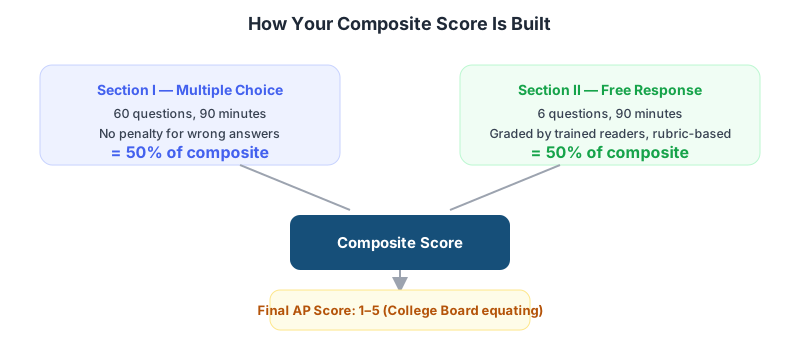
The AP Biology exam does not use a fixed percentage system. Instead, raw points from the multiple-choice and free-response sections are combined into a composite score, which is then converted into a final AP score from 1 to 5 using the College Board's internal scaling process. This conversion adjusts slightly each year based on exam difficulty — a process called equating.
What is a raw score in AP Biology?
A raw score is the total number of points you earn before conversion.
What makes up the raw score?
- Number of correct multiple-choice answers out of 60 questions
- Total points earned across the 6 free-response questions, graded against published rubrics
There is no deduction for incorrect multiple-choice answers, so the raw score reflects only points you earned — guessing carries no penalty.
What is a composite score?
A composite score is created after weighting both exam sections equally.
How the composite score is formed
- MCQ raw score is scaled to represent 50% of the composite
- FRQ raw score is scaled to represent 50% of the composite
- Both weighted values are added into one composite total
Students never see this composite number directly on a score report — only the final 1–5 AP score is reported, but understanding the composite helps you interpret practice exam results.
Typical AP Biology score conversion ranges
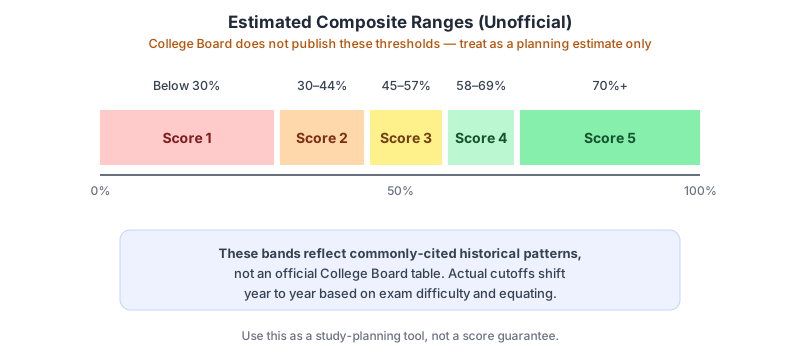
The College Board does not publish official cutoffs for AP Biology. However, based on publicly available score distributions and patterns widely cited by educators and exam-prep resources, commonly used estimated ranges look roughly like this:
| Composite Score Percentage | Likely AP Score (estimated) |
|---|---|
| 70% and above | 5 |
| 58% – 69% | 4 |
| 45% – 57% | 3 |
| 30% – 44% | 2 |
| Below 30% | 1 |
What score do most students actually get?
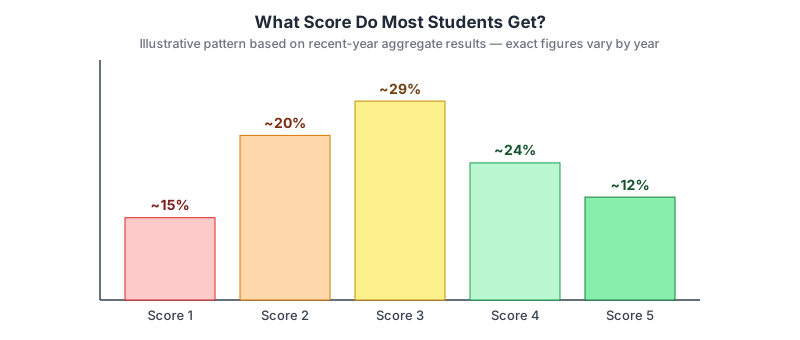
Looking at recent-year aggregate results, AP Biology scores tend to cluster around the middle of the scale, with roughly two-thirds of students typically scoring a 3 or higher in recent years:
Why AP Biology score cutoffs change every year
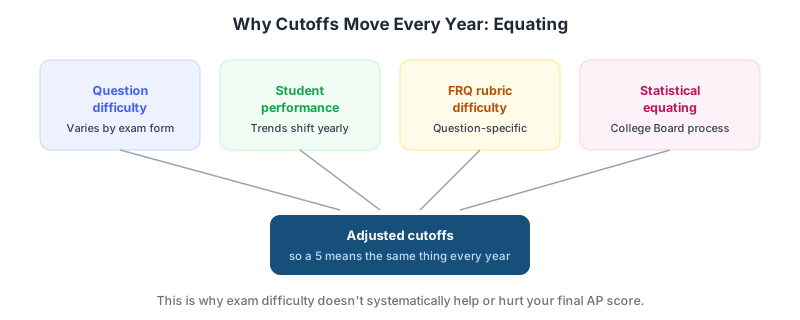
AP Biology exams vary slightly in difficulty each year, so the College Board adjusts cutoffs through a statistical process called equating.
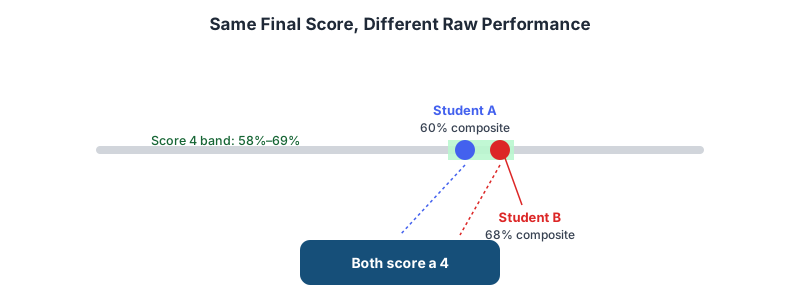
Can two students with different raw scores get the same AP score?
Yes. Score conversion groups a range of composite scores into a single AP score.
Does the score conversion favor or hurt students?
The conversion process is designed to be neutral, not punitive.
Key points to understand
- Harder exam years typically allow a lower raw score to still reach a given AP score
- Easier exam years typically require a higher raw score for the same AP score
- The final AP score is designed to remain consistent in meaning across years
In other words, students are not systematically disadvantaged by sitting a harder exam in a given year.
How students should use score conversion charts
Score charts are planning tools, not confirmations of your final result.
Best use of conversion estimates
- Track progress across practice exams over time
- Set realistic target scores based on where you currently stand
- Identify which section (MCQ or FRQ) needs more focus
- Reduce exam-day anxiety by understanding how scoring actually works
Official scores are always released by the College Board, typically in July, and only that release is authoritative.
FAQs – AP Biology Score Conversion
What is AP Biology score conversion?
AP Biology score conversion is the process of converting raw exam scores from the multiple-choice and free-response sections into a final AP score on the 1 to 5 scale.
Why is score conversion needed in AP Biology?
Score conversion standardizes results across different exam forms and years so that a given score reflects a consistent level of achievement, regardless of that year's exam difficulty.
How do I calculate my raw AP Biology score?
Add your number of correct multiple-choice answers to the points earned across the free-response section. There is no penalty for incorrect multiple-choice answers.
How is the final AP score determined from the raw score?
Your MCQ and FRQ raw scores are each weighted at 50% and combined into a composite score. The College Board then converts that composite into a final 1-5 AP score using an internal equating process that is not published.
Are AP Biology score conversion charts the same every year?
No. Because the College Board adjusts cutoffs annually based on exam difficulty and student performance, any conversion chart is an estimate rather than a fixed, official table.
Can I estimate my AP Biology score before official results?
Yes. Students can compare their raw performance against commonly-cited historical ranges to get a rough estimate, but the official score, released by the College Board, may differ.
Is this score conversion guide official?
No. This guide is based on publicly available information about the AP Biology exam format and commonly-cited historical patterns. It is not an official College Board publication, and College Board does not publish an official raw-to-scaled conversion table.
Are online AP Biology score calculators accurate?
They provide reasonable estimates based on historical patterns, but cannot predict your exact official score, since exact cutoffs are set after each exam through a process the College Board does not publish.
Try the AP Biology Score Calculator →