Home Selling Calculator – Calculate Your Net Proceeds Online for Free
Home Selling Calculator
Note: This calculator provides estimates only. Actual costs and proceeds may vary by lender, agent, and location.
Home Selling Calculator: How Much Will I Actually Make Selling My House?
Selling a home is one of the most significant financial transactions you will ever make. But here is the reality check: the "Sold" price on the yard sign isn't the amount that ends up in your bank account. Between agent commissions, closing costs, and your remaining mortgage, the gross price can be very different from your net profit.
If you are asking "How much will I actually make selling my house?" you aren't just looking for a guess — you need a plan.
Our Home Selling Calculator is designed to strip away the mystery. By accounting for commission, closing costs, mortgage payoff, and repair costs, this tool shows your "walk-away" number before you even list the property.
What Is a Home Selling Calculator?
A Home Selling Calculator is a digital financial tool that estimates the total amount of money a seller will receive after all expenses are paid — often called a net proceeds calculator.
Instead of manually juggling a spreadsheet, you enter your expected sale price and cost information, and the calculator applies the math instantly to give you a realistic picture.
How This Calculator Works
To give you an accurate estimate, the calculator processes five data points:
- Sale Price: The total amount the buyer agrees to pay. This is the starting point for every other calculation.
- Agent Commission: In a traditional US transaction, the seller typically pays commission for both their own agent and the buyer's agent, commonly totaling around 5% to 6% of the sale price.
- Closing Costs: Administrative and legal fees needed to finalize the sale — title insurance, escrow fees, and local transfer taxes, typically 1% to 3% of the sale price in the US.
- Remaining Mortgage: To sell with a clear title, you must pay off your existing loan balance in full at closing.
- Repairs / Prep Costs: Money spent getting the home ready to sell — staging, minor repairs, touch-up paint, or a pre-listing inspection fix list.
Why You Should Calculate Net Proceeds Before Selling
- Financial Planning: You need to know if you'll have enough for a down payment on your next home.
- Negotiation Power: Knowing your bottom-line number lets you negotiate with buyers more confidently.
- Avoid "Underwater" Surprises: Some sellers discover they owe more than the house is worth. Finding this out early lets you adjust your strategy before listing.
- Budgeting for Repairs: Knowing your estimated profit helps you decide if that $10,000 kitchen refresh is actually worth it before selling.
Step-by-Step Guide: How to Use This Calculator
- Estimate Your Home Value: Look at recent comparable sales in your neighborhood for a realistic sale price.
- Check Your Mortgage Statement: Log in to your loan servicer's portal for your current payoff amount (slightly higher than your principal balance due to accrued interest).
- Enter Your Commission Rate: The US average is around 5.7% total, but you can adjust this if you've negotiated a different rate — or set it to 0% for a for-sale-by-owner sale.
- Input Estimated Closing Costs: Generally 1% to 3% of the sale price in the US.
- Add Repair or Prep Costs: Any money you expect to spend getting the home market-ready.
- Review Your Results: The tool instantly shows your net proceeds and a visual breakdown.
Example Calculation (Real-Life Scenario)
Let's look at a typical home sale in a suburban US market to see how the numbers break down.
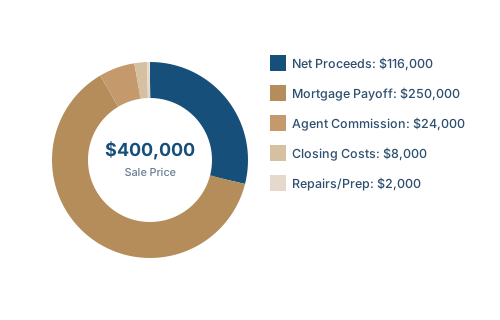
Sale Price: $400,000
Remaining Mortgage: $250,000
Agent Commission (6%): $24,000
Closing Costs: $8,000
Repairs / Prep: $2,000
The Math:
$400,000 − $250,000 − $24,000 − $8,000 − $2,000 = $116,000
Even though the house sold for nearly half a million dollars, the seller's take-home is $116,000 — enter these exact numbers into the calculator above to check it yourself.
How Commission Rate Changes Your Bottom Line
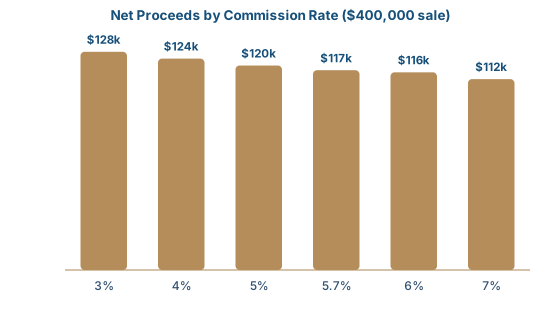
Commission is usually the single largest deduction, so even small rate differences add up fast. On the same $400,000 sale above, here's how net proceeds shift across commission rates:
How Sale Price Changes Your Net Proceeds
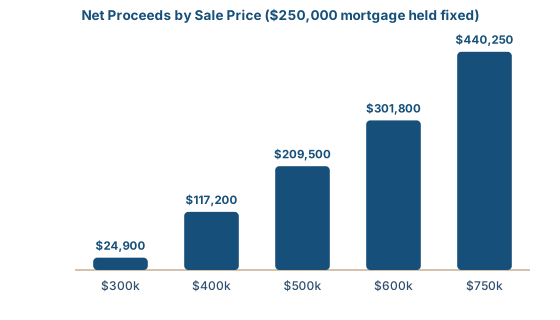
Because your mortgage payoff is a fixed dollar amount, it eats a much bigger share of a lower sale price than a higher one. This is exactly why "underwater" sales happen at the low end:
Is Commission Different Outside the US?
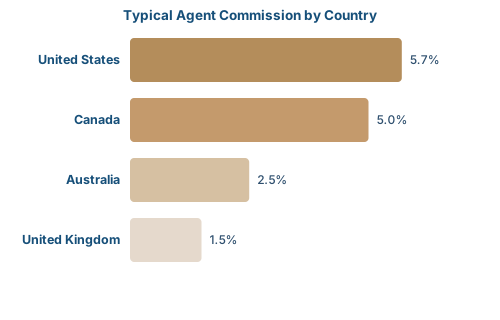
Yes, significantly. The 5-6% commission this calculator defaults to is a US and Canadian norm — many other countries charge far less:
Breakdown of Home Selling Costs
Real Estate Agent Commission
Usually the largest expense. It's typically split between the listing brokerage and the buyer's brokerage, and covers marketing, photography, showings, and contract management.
Closing Costs
These vary by state but typically include:
- Title Insurance: Protects the buyer from ownership disputes.
- Transfer Taxes: Fees paid to the city or state for transferring the deed.
- Escrow / Attorney Fees: The cost of the professionals who handle the closing.
Remaining Mortgage
This isn't always just your last statement balance — it may include a reconveyance fee or a small prepayment penalty depending on your loan terms, so use your lender's official "payoff amount," not your principal balance.
Net Proceeds vs. Capital Gains
Net proceeds is the cash you actually receive at closing after commissions, closing costs, mortgage payoff, and other selling costs are deducted from the sale price. Capital gains is a separate tax concept — your profit compared to what you originally paid, known as your cost basis. The two numbers are usually different, and only capital gains determines any tax owed.
In the US, if the home was your primary residence for at least 2 of the last 5 years, IRC Section 121 lets you exclude up to $250,000 (single) or $500,000 (married filing jointly) of that gain from federal tax. This is general information, not tax advice — confirm your specific situation with a tax professional.
Factors That Affect Your Final Profit
- Seller Concessions: In a buyer's market, you might agree to cover a few thousand dollars of the buyer's closing costs to get the deal done.
- Home Warranty: Many sellers buy a one-year warranty (roughly $500–$800) for the buyer as a selling incentive.
- Property Tax Proration: You'll typically owe property taxes for the days you owned the home during the current tax year.
- Inspection Repairs: Issues found during a buyer's inspection can eat into your profit quickly if not budgeted for.
Tips to Maximize Your Home Sale Profit
- Boost Curb Appeal: Small landscaping investments often return more than they cost.
- Negotiate Commission: If you're buying your next home with the same agent, they may offer a discount on the listing side.
- Time the Market: Selling when inventory is low (often spring in many US markets) can lead to stronger offers.
- Declutter and Stage: Professional staging is commonly cited as adding a modest but real boost to sale price.
Common Mistakes Home Sellers Make
- Overpricing the Home: This leads to the listing sitting on the market, which often forces a price cut that makes the home look "stale" to buyers.
- Underestimating Small Repairs: Buyers often ask for a bigger discount than a repair actually costs — budget for it upfront instead.
- Guessing the Mortgage Payoff: Always get your official payoff amount from your lender rather than estimating from your last statement.
Who Should Use This Calculator?
- First-Time Sellers: To understand the costs involved before listing.
- Investors: To estimate return before selling a rental property (capital gains treatment differs for non-primary residences — see a tax professional).
- Empty Nesters: To see if the profit from a larger home is enough to fund the next move, or whether a retirement or reverse mortgage plan might fit better.
- For-Sale-By-Owner Sellers: To see how much they might save by not paying a listing commission.