Why the Right Bra Size Matters
Wearing the right bra size is not just about appearance — it's about comfort, support, and confidence. Industry surveys are widely cited as finding that a large majority of women wear the wrong bra size, which often leads to unnecessary discomfort. The right bra can improve posture, prevent back pain, and even make your clothes fit better.
Imagine walking all day in shoes that are too small or too loose — your feet would ache, your posture would be affected, and you'd feel uncomfortable. The same logic applies to bras. A poorly fitted bra can dig into your skin, slip off your shoulders, or fail to provide proper support. A well-fitted bra, by contrast, feels almost invisible while giving you freedom of movement and support.
Beyond comfort, the right bra size also affects how your clothes sit. When your bra fits correctly, your outfits look smoother and your silhouette appears more balanced.
How to Measure for a Bra Size
- Underbust (band): Wrap a soft tape measure snugly around your ribcage, directly under your bust, keeping it level and parallel to the floor.
- Bust: Wrap the tape around the fullest part of your chest, keeping it relaxed rather than tight.
Measure in your usual bra, or unsupported, but be consistent — mixing the two will skew your result.
How Bra Sizing Works (Band + Cup)
Bra sizing might seem confusing at first, but it comes down to two components: band size and cup size.
- Band Size: The number part of your bra size (e.g., 32, 34, 36). This calculator rounds your direct underbust measurement to the nearest even number to get it.
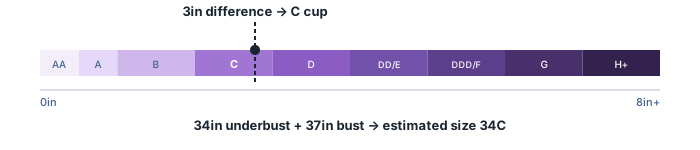
- Cup Size: The letter part of your bra size (e.g., A, B, C, D). It's based on the difference between your bust measurement and your underbust measurement — each inch of difference generally moves you up one cup letter.
- For example: if your underbust measures 34 inches and your bust measures 37 inches, the difference is 3 inches, which lands on a C cup — making your estimated size 34C.
Bra sizes are also relative, not absolute — a 34C and a 36B don't look identical on the body even though they're considered similar cup volumes. That relationship is called sister sizing, covered below.
Modern Method vs. the Older "Plus Four" Method
This calculator uses the direct-measurement method that most professional fitters currently recommend: your underbust measurement, rounded to the nearest even number, is your band size.
Older sizing guidance commonly added 4 or 5 inches to the underbust measurement before rounding — a method that dates back to less elastic bra fabrics. With today's stretchier materials, that extra allowance usually results in an oversized, less supportive band. Because of this, decades-old size charts, hand-me-down bras, or some department-store fittings may label the same body with a noticeably larger band number than this calculator does.
Understanding Sister Sizes
A "sister size" shares roughly the same cup volume as your calculated size but reaches it with a different band-and-cup combination. Going up one band size while going down one cup letter (or the reverse) generally keeps the cup volume similar. If your calculated size runs tight in the cup but loose in the band, or vice versa, a sister size is usually the first thing worth trying — this calculator lists them automatically alongside your main result.
Signs Your Bra Doesn't Fit
- The band rides up in the back instead of sitting level with the front.
- Straps dig into your shoulders or slip down repeatedly.
- The cup gapes, wrinkles, or your tissue spills over the top or sides.
- The center gore (the fabric between the cups) doesn't sit flat against your sternum.
A Note on International Sizing
US, UK, EU, and French sizing all describe the same measurements differently. Cup letters can shift by one letter between systems at the same measurements, and EU/French band numbers are based on centimeters rather than inches, using an entirely different numbering scale. Because of this, converting a size across systems is only approximate — checking a specific brand's own size chart is more reliable than converting between systems.
Frequently Asked Questions
At The End
Bra sizing is both a science and an art. Knowing your measurements gives you a reliable starting point, but trying on different styles is often necessary since every brand has slight variations.